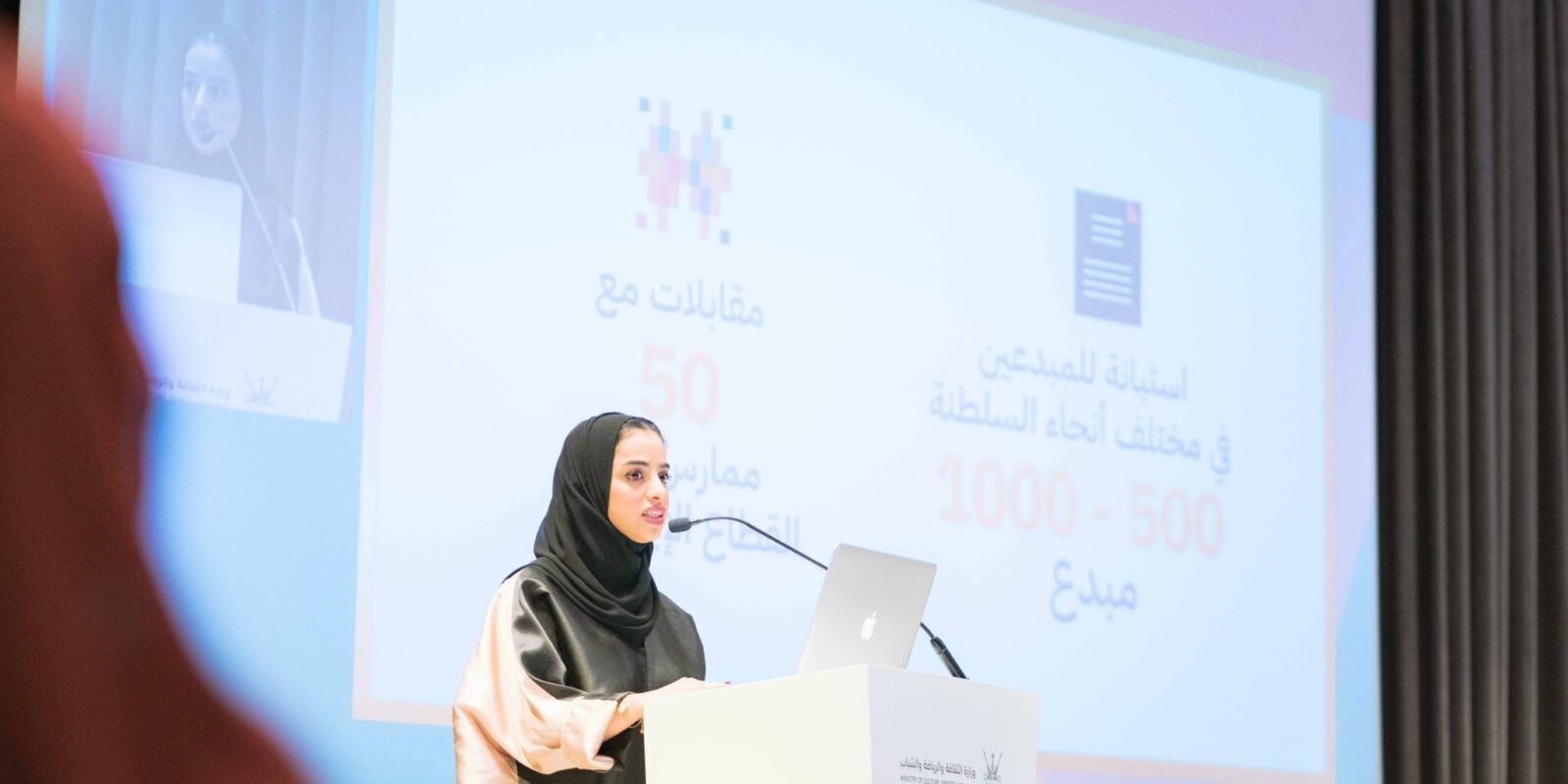
When I took on the leadership of the Cultural and Creative Industries Mapping Project in 2021, Oman had a vibrant creative life but very little reliable data to describe it. We knew our artists, designers, publishers, filmmakers and craftspeople were active and contributing – yet the sector existed largely outside the reach of evidence and policy. This was the first national initiative to map and analyse the cultural and creative industries in the Sultanate, and its purpose was deceptively simple: to make a sector visible to itself and to those who must plan for it.
The challenge was not a shortage of creativity but a shortage of knowledge about it. Without a shared definition of what counts as a creative industry, without an inventory of sub-domains and actors, and without a clear reading of the obstacles they face, any conversation about a creative economy risks resting on assumption rather than understanding. Our work began, therefore, by building the foundations: a vocabulary, a framework, and an honest baseline.
Objectives
- Build a comprehensive, credible knowledge base for the cultural and creative sector in Oman.
- Identify the sector’s sub-domains, key actors, and the value chains that connect them.
- Surface the structural challenges and the genuine opportunities facing creative practitioners.
- Equip policymakers with the evidence needed to develop creative-economy and creative-entrepreneurship strategies.
Approach and Impact
We adopted a method that was both rigorous and grounded. Rather than importing a foreign taxonomy wholesale, we worked from international frameworks while adapting them to Omani realities – listening closely to practitioners through consultation, fieldwork and direct dialogue. The aim was a map that creative people could recognise as their own, not an abstraction imposed from outside.
A sector that cannot be seen cannot be supported. The first act of any creative-economy policy is to make the field legible.
The project’s lasting contribution was to give the conversation a common ground. By naming the sub-domains, locating the actors and documenting the gaps, it offered policymakers and institutions a starting point built on evidence rather than impression. More quietly, it told a community of practitioners that their work was recognised as part of the national economy – and that recognition, in my experience, is where serious support begins.