
Rethinking Investment Risks, Economic Viability, and International Lessons
During the Oman Investment Authority’s Annual Media Briefings in 2025 and 2026, the Chairman was asked whether the Authority would consider investing in the creative and sports sectors.
In 2025, the response was cautious. These sectors were described as primarily promotional rather than investment-oriented, making them inconsistent with the Authority’s conservative investment philosophy. However, by 2026, the discourse had shifted noticeably. The Chairman stated that the creative industries should be treated like any other economic sector and that investment would be considered whenever a sound economic case could be demonstrated.
This shift from institutional caution to conditional openness raises three important questions. Why are the creative industries widely perceived as a high-risk investment? How can Oman create the economic conditions necessary to attract investment into the sector? And what lessons can be drawn from countries that have successfully transformed culture and creativity into engines of economic growth?
“The creative industries are no different from any other economic sector. The Oman Investment Authority will support them whenever there is a sound economic case.”
Chairman of the Oman Investment Authority, 2026
Why Is Investing in the Creative Industries Considered High Risk?
The Oman Investment Authority’s cautious position in 2025 was not merely an institutional reservation; rather, it reflected an economic reality that has been widely recognised in the academic literature. In his seminal book Creative Industries: Contracts Between Art and Commerce, the American economist Richard Caves describes one of the defining characteristics of the creative industries as the “Nobody Knows” principle the idea that the commercial success of a creative product cannot be predicted before it enters the market and, in many cases, cannot be fully explained even after it succeeds. This inherent uncertainty undermines one of the fundamental pillars of investment decision-making: the ability to forecast returns and assess risk with confidence.
Beyond this uncertainty, a number of structural characteristics make investment in the creative industries significantly more complex than investment in conventional sectors.
1. Limited Investment Collateral
Creative industries rely primarily on intangible assets, including intellectual property, reputation, branding, and human capital, rather than tangible assets such as factories or real estate. Consequently, these assets are difficult to use as collateral under conventional financing models, increasing perceived risk for both investors and financial institutions.
Evidence from a 2022 study published in the Journal of Cultural Economics, based on a survey of 575 creative businesses in the United Kingdom, found that more than 70% of creative firms experience financing constraints, while 62% reported that limited access to finance had restricted their growth. These findings point not to an isolated national issue but to a structural mismatch between the nature of creative assets and traditional financial systems.
2. Long Investment Cycles and Fragile Returns
Creative ventures often require years of development, experimentation, and audience building before generating stable financial returns. During this period, many projects enter what innovation finance literature refers to as the “Valley of Death”the financing gap between the initial development of an idea and its first commercial success.
This challenge is particularly acute in emerging economies, where specialised venture capital markets for creative industries remain underdeveloped.
3. Market Concentration and the Winner-Takes-All Effect
In his influential study The Economics of Superstars (1981), economist Sherwin Rosen demonstrated that creative markets are characterised by highly concentrated returns, where a very small number of products capture the majority of market revenues while most creative projects generate only modest or negligible returns.
This argument was later expanded by Frank and Cook in The Winner-Take-All Society (1995), highlighting that exceptional success among a few creative products is accompanied by limited commercial success for the majority.
As a result, investment in the creative industries typically requires diversified portfolios capable of absorbing numerous unsuccessful projects while relying on a small number of exceptional successes to generate overall returns—a model that does not naturally align with the conservative investment strategies adopted by many sovereign wealth funds.
4. Difficulties in Measuring Economic Returns
The value generated by the creative industries extends far beyond direct revenues. It also includes indirect economic benefits such as increased tourism, stronger national identity, enhanced international reputation, and greater attractiveness to investment.
According to the UNCTAD Creative Economy Outlook 2024, the creative economy contributes between 0.5% and 7.3% of GDP worldwide. This variation reflects not only differences in the size of creative economies but also substantial disparities in countries’ ability to measure and demonstrate their economic contribution.
For investors, this creates an additional challenge: many of the sector’s most significant benefits remain difficult to translate into financial indicators that can be compared directly with conventional industries.
5. Vulnerability to External Shocks
The COVID-19 pandemic exposed the exceptional vulnerability of the creative industries, particularly live performance, cinema, exhibitions, and cultural events.
Research published by the Creative Policy and Evidence Centre (PEC) at Cardiff University in 2023 found that regions specialising in film and television production experienced some of the most severe economic impacts during the pandemic.
This vulnerability is partly explained by the sector’s labour market structure. According to Creative UK (2025), freelancers account for approximately 28% of employment in the creative industries, compared with 14% across the wider economy. Such a workforce structure makes the sector less resilient during periods of economic disruption.
6. Intellectual Property Risks and Digital Piracy
In many emerging economies, investment in creative industries faces additional risks arising from weak intellectual property protection and widespread digital piracy.
UNCTAD reports that these challenges create a double economic loss: they reduce returns for creators and investors while simultaneously limiting government tax revenues and weakening the attractiveness of the investment environment.
Without an effective intellectual property system, creative assets remain vulnerable to unauthorised use and reproduction, significantly reducing incentives for both creative production and long-term investment.
7. Technological Disruption and Artificial Intelligence
Alongside traditional investment risks, generative artificial intelligence has emerged as one of the most significant new sources of uncertainty.
According to UNCTAD (2024), 41% of news organisations worldwide already use artificial intelligence to produce visual content, 39% use it to generate social media content, and 38% employ AI in writing news articles and editorial content.
These developments suggest that existing creative business models may change fundamentally within a relatively short period, making it increasingly difficult to estimate the future returns of long-term creative investments.
8. The Promotional Nature of Certain Cultural Projects
Many large-scale cultural initiatives derive their value primarily from their contribution to soft power, international visibility, and cultural diplomacy rather than immediate financial returns.
This largely explains the Oman Investment Authority’s cautious position in 2025, when such activities were viewed as promotional rather than investment-oriented.
Distinguishing between projects designed primarily to generate public value and creative assets capable of producing commercial returns remains one of the most complex analytical challenges in creative economy investment.
9. Institutional Fragmentation
In the absence of a unified governance framework for the creative industries, investors often face responsibilities dispersed across multiple government bodies, including culture, commerce, tourism, media, and related institutions.
This institutional fragmentation increases transaction costs, prolongs investment decisions, and creates additional uncertainty.
Research from the Creative Policy and Evidence Centre (PEC) also highlights that successful creative economies are typically supported by well-developed creative clusters, where coordinated institutional ecosystems improve investment efficiency an important challenge for many emerging economies.
How Can Oman Build Economic Viability?
Economic viability is often treated as something that is discovered during project evaluation. In the creative industries, however, the opposite is true: economic viability is not discovered it is built. It emerges through policies, institutions, investment frameworks, and regulatory environments capable of transforming cultural assets into sustainable economic value.
For Oman, this can be achieved through four interrelated priorities.
Distinguishing Sectors by Investment Readiness
Not all creative industries are equally prepared for investment. Treating the sector as a single homogeneous market risks overlooking significant differences in maturity and commercial potential.
In Oman, sectors such as cultural tourism, traditional crafts, and media have already established relatively strong governance structures and market foundations, making them better positioned to attract direct investment.
By contrast, sectors such as film production, digital games, and digital design remain at earlier stages of development. Rather than direct investment, these industries require business incubation, seed financing, specialised training, and regulatory incentives before becoming commercially investment-ready.
Recognising these different stages of development is essential for designing a more effective investment strategy one that directs capital towards mature sectors while continuing to nurture emerging creative industries until they reach commercial viability.
Building a National Creative Economy Measurement Framework
International evidence consistently demonstrates that high-quality statistical data is one of the strongest determinants of investment confidence in the creative economy.
According to the UNCTAD Creative Economy Outlook 2024, the creative economy contributes between 0.5% and 7.3% of GDP worldwide and accounts for 0.5% to 12.5% of total employment. Such variation reflects not only differences in economic structures but also significant disparities in countries’ ability to identify, classify, and measure creative economic activity.
In this regard, Oman’s Cultural and Creative Industries Mapping Project (2021–2024) represents an important milestone. The project documented approximately 483 economic activities and 1,020 creative occupations, establishing a valuable national evidence base upon which more comprehensive indicators can be developed.
Reliable data does more than improve understanding of the sector. It provides investors and policymakers with a common evidence base for evaluating economic viability and making informed investment decisions.
Strengthening Linkages Across the Economy
The economic value of the creative industries extends well beyond the sector itself. Their impact is often realised through strong connections with tourism, hospitality, retail, real estate, digital technologies, and other industries.
Cultural tourism in Oman illustrates this dynamic. Heritage destinations such as Harat Al Aqr generate value that extends beyond visitor spending at the site itself. They stimulate local businesses, increase demand for accommodation and hospitality services, support traditional crafts, and contribute to broader regional economic activity.
For this reason, investment appraisal should not focus solely on the direct financial returns of individual projects. It should also account for the wider value generated across supply chains and related industries.
Designing Investment Instruments for the Creative Economy
In many cases, the challenge is not the absence of economic viability but the application of investment models originally designed for traditional industries.
International experience suggests several policy instruments that are better suited to the characteristics of the creative economy, including:
- tax incentives for creative production;
- investment in creative infrastructure, such as studios, design hubs, business incubators, and innovation spaces; and
- public–private investment funds that distribute risk while encouraging long-term private investment.
These approaches recognise that creative industries require investment ecosystems rather than conventional financing mechanisms.
What Can Oman Learn from International Experience?
When looking for successful models, it may seem natural to examine large creative economies such as the United Kingdom or South Korea. However, the most relevant lessons for Oman arguably come from small and medium-sized economies that have faced similar challenges: relatively limited domestic markets, ambitions to diversify their economies, and the strategic use of culture as an economic asset.
Although these countries adopted different policy approaches, they all arrived at the same conclusion:
Successful creative economies are built not through direct investment in creative content alone, but through investment environments that reduce risk and attract private capital.
New Zealand: Tax Incentives Instead of Direct Funding
New Zealand faced a question remarkably similar to the one confronting Oman today:
How can a country attract major international creative investment without becoming the direct financier of high-risk creative projects?
Its answer was the New Zealand Screen Production Grant, which offers production rebates ranging from 20% to 40% of eligible expenditure rather than direct government funding.
This approach successfully attracted major international productions, including Avatar, The Lord of the Rings, and numerous large-scale film and television projects.
The economic outcomes are equally compelling. Between 2014 and 2022, production expenditure exceeded NZ$5.2 billion, while government support totalled approximately NZ$1.15 billion equivalent to more than NZ$4.50 in economic activity for every dollar invested. In recognition of the programme’s success, the New Zealand Government allocated an additional NZ$577 million in 2025.
Lesson for Oman
Rather than financing creative projects directly, Oman could achieve similar outcomes through carefully designed investment incentives that reduce risk while attracting private and international investment.
Ireland: Investing in the Ecosystem Before Investing in Content
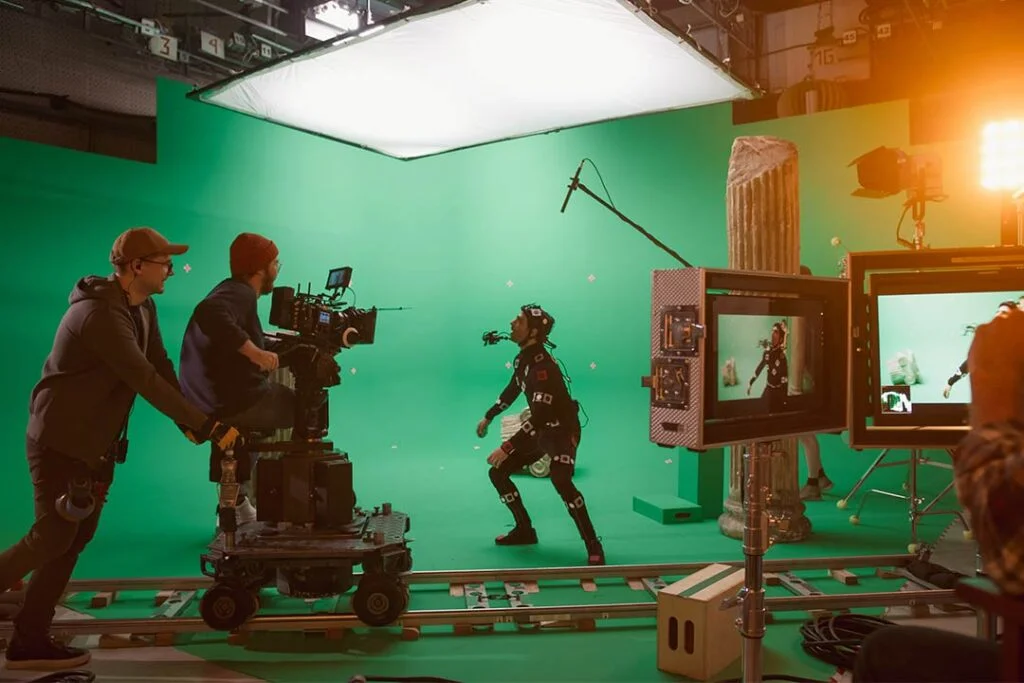
Ireland offers another compelling example of how a relatively small economy can build a globally competitive creative sector without relying primarily on direct public investment.
Rather than funding creative projects outright, Ireland focused on developing a competitive regulatory and fiscal environment. A cornerstone of this strategy is Section 481, a tax credit scheme for film and television production that initially offered a 32% tax credit before increasing to 40% for visual effects production in 2026, strengthening Ireland’s competitiveness in high-value creative production.
The results have been significant. Today, Ireland’s screen industry contributes more than €1 billion annually to the national economy and supports approximately 16,000 specialised jobs. Irish studios have also hosted major international productions, including WandaVision, Spider-Man, and Shōgun.
Lesson for Oman
Economic viability does not always require direct public investment. It can also be created through a policy and regulatory environment that makes creative investment an attractive proposition for the private sector.
Saudi Arabia: Investing Through Specialised Investment Vehicles
Saudi Arabia offers perhaps the most relevant regional example for Oman.
Rather than investing directly in high-risk creative projects through the Public Investment Fund (PIF), Saudi Arabia has increasingly adopted a model based on establishing specialised companies dedicated to investing in and developing segments of the creative economy.
One prominent example is the launch of Qisas (National Interactive Entertainment Company) in 2024, which focuses on developing interactive storytelling experiences inspired by Saudi heritage and Islamic culture.
In addition, the PIF’s 2026–2030 strategy identifies digital gaming and esports among its priority investment sectors.
A defining feature of this model is the separation between traditional sovereign investment portfolios and creative economy investments. Dedicated investment entities operate under different risk profiles and longer investment horizons, allowing creative investments to be managed independently from the Fund’s core portfolio.
Lesson for Oman
Establishing a specialised investment vehicle dedicated to the creative economy could provide a balanced approach for the Oman Investment Authority. Such a model would enable investment in creative industries while preserving the Authority’s conservative investment philosophy and overall portfolio strategy

Conclusion: The Question Is No Longer Whether, but How
The shift in the Oman Investment Authority’s public discourse between 2025 and 2026 reflects a growing recognition of the economic potential of the creative industries. This evolution mirrors a broader global trend, as governments increasingly acknowledge creativity and culture as drivers of innovation, competitiveness, and long-term economic diversification.
According to the UNCTAD Creative Economy Outlook 2024, global exports of creative services reached US$1.4 trillion in 2022, representing 29% growth over five years. At the same time, the experiences of countries such as New Zealand, Ireland, and Saudi Arabia demonstrate that successful investment in the creative economy is not simply a matter of allocating more capital. Rather, it depends on designing institutional, regulatory, and investment frameworks capable of managing uncertainty while transforming creativity into sustainable economic value.
Oman possesses many of the foundations required to participate in this transformation. It has a rich cultural heritage, diverse creative assets, a national vision centred on economic diversification and the knowledge economy, and a young generation with growing creative capabilities.
The question, therefore, is no longer whether the creative economy deserves investment. The more important question is how investment models can be designed to reflect the distinctive characteristics of the sector.
Answering this question will shape not only the future of Oman’s cultural and creative industries, but also the country’s broader economic trajectory. If supported by the right investment frameworks and institutional reforms, the creative economy can become a meaningful pillar of a more diversified, innovative, and resilient Omani economy one in which culture and creativity are recognised not as peripheral activities, but as central components of sustainable development.